
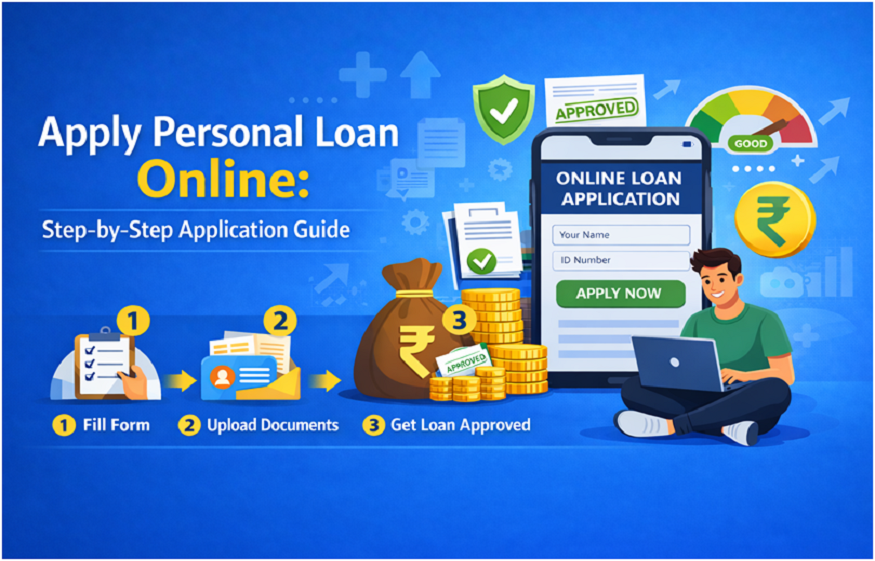
The first time I went online for a personal loan, I recall having the thought; this is either going to be surprisingly easy or quietly stressful. It was a combination of both, indeed.
Personal online loans promise you speed, convenience, and few awkward conversations. No need to visit a branch. No need to sit down with a bank teller or financial advisor to explain why you need the money. Only you, a form to fill out, a few documents to present, and a response that comes sooner than you think is possible.
But behind all this simplicity is a process that’s worth understanding, because small choices along the way can change how expensive, stressful, or smooth the whole experience becomes.
Of course, that isn’t exactly a step-by-step guide. It’s more like going through the steps with someone who has done it, made a few mistakes along the way, learned a few things, and wishes they had taken a little more time in some areas.
The moment you realize you need a loan
People don’t wake up excited to apply for a personal loan. Usually, there’s a reason. Medical expenses. A sudden repair. Consolidating debt. Sometimes it’s an opportunity. Sometimes it’s pressured.
That emotional context matters more than we admit.
When you’re already stressed, it’s easy to rush the process. Click on the first offer. Accept the first approval. Promise yourself you’ll “figure it out later.”
In my experience, that’s where people get into trouble, not because personal loans are bad, but because of urgency clouds judgment.
Step one: pausing before you click “Apply”
Before you even open a loan app or website, there’s a quiet step for most guides to skip: checking whether you really need the full amount you think you do.
Online platforms make it easy to slide amounts up and down. A little more feels harmless. Approval messages can make it feel even safer.
But every extra rupee borrowed comes with interest attached. That doesn’t feel real at the application stage. It feels very real six months later.
Spending five minutes thinking through the amount, what’s essential versus what’s convenient, can save months of regret.
Choosing where to apply (this matters more than people think)
When you search for “apply personal loan online,” you’re flooded with options. Banks. NBFCs. Apps. Aggregators. Everyone claims speed. Everyone claims low rates.
What’s less obvious is that not all platforms behave the same way behind the scenes.
Some do a soft check first. Some jump straight to a hard credit enquiry. Some show attractive rates upfront and revise them later.
I’ve learned to be cautious with platforms that rush you toward submission without clearly explaining what happens next. Transparency early usually predicts fewer surprises later.
The quiet role your credit profile plays
Your credit score doesn’t just affect approval. It shapes the entire experience.
Interest rate offers. Loan amount eligibility. Repayment flexibility. All of it shifts based on that number.
What surprised me when applying online was how quickly platforms assess this. Sometimes within seconds. Sometimes silently.
If you haven’t checked your credit report recently, it’s worth doing it before applying. Not because you can change it overnight, but because knowing where you stand helps set expectations.
Disappointment hurts less when you see it coming.
Filling out the application (where most people go on autopilot)
This is the part that feels deceptively simple. Personal details. Employment information. Income. Address.
It’s tempting to rush through, especially when the form looks familiar. But accuracy matters here more than speed.
Small inconsistencies such as different addresses, mismatched income figures, unclear employment details, can slow things down or trigger extra verification.
I’ve learned to treat this step like filling out official paperwork, not a sign-up form. Slowing down here saves time.
Uploading documents without overthinking it
Most online personal loan applications ask for similar documents. Identity proof. Address proof. Income proof. Bank statements.
The process has improved a lot. Uploading photos or PDFs is usually straightforward.
Still, quality matters. Blurry images. Cropped details. Old statements. These things can stall an otherwise smooth application.
One small habit that helped me: checking documents once before uploading, as if someone else was reviewing them. Because someone else will be.
The waiting phase (even when it’s fast)
Online loans are quick. Sometimes impressively so.
But there’s still a waiting phase. It might be minutes. It might be hours. Occasionally, a day or two.
This is where your emotional state can fluctuate. You refresh your emails. Check app notifications. I wonder what silence means.
In my experience, silence usually just means processing, not rejection. But the mind fills gaps creatively.
Having realistic expectations helps. Fast doesn’t always mean instant.
Approval messages feel better than they should
There’s a small rush when approval comes through. Especially if the amount is higher than expected, or the process feels painless.
This is a dangerous moment.
Because approval feels like validation. Like the system agrees with your decision. It’s easy to accept terms without reading carefully, riding that emotional high.
I’ve done this once. I don’t recommend it.
Reading the loan offer when you don’t feel like it
Interest rate. Tenure. EMI. Processing fees. Penalties. Prepayment conditions.
This is the least exciting part of the process and the most important thing.
Online platforms are better now at summarizing this clearly, but details still matter. Especially things you don’t expect to use, like foreclosure options or late payment charges.
Even if you don’t understand everything fully, noticing what’s there and what’s not, helps you avoid surprises later.
E-signing and the point of no return
Once you accept the offer and e-sign, the loan becomes real.
Money moves quickly after this. Sometimes shockingly quickly.
I remember being surprised by how fast funds landed in my account. Faster than the emotional adjustment of knowing I’d taken on debt.
That moment deserves acknowledgement. You’ve made a commitment. It’s okay to feel relief and responsibility at the same time.
After disbursal: the part nobody talks about
Most guides end once the money is credited. Real life begins there.
Your bank balance looks healthier. The immediate problem is solved. And somewhere in the background, EMIs quietly line up.
The best thing I did after receiving a personal loan was to immediately map out repayments. Not just in my head, but on paper. Dates. Amounts. Account balances.
Auto-debit: convenience with a responsibility clause
Most online personal loans rely on auto-debit. It’s convenient and usually reliable.
But it also assumes your account will always be funded on the due date. That’s fine when income is stable. Trickier when cash flow fluctuates.
Building a buffer specifically for EMIs helped me sleep better. Not everyone does this. Those who don’t often learn the hard way.
Prepayment thoughts creep in eventually
At some point, you might consider prepaying or closing the loan early. Maybe income will improve. Maybe priorities will change.
This is where those early terms you skimmed suddenly matter.
Some loans allow for easy prepayment. Some penalize it. Some restrict it to certain periods.
Knowing this upfront doesn’t force you to act later, but it gives you options.
When applying online works beautifully
Online personal loans work best when your profile is straightforward. Stable income. Clean credit history. Clear documents.
In those cases, the process can feel almost too easy. That ease is genuine, not a trap.
Technology has improved lending efficiency. There’s no denying that.
When it feels frustrating
If your income is irregular, your credit history mixed, or your documentation non-standard, online systems can feel rigid.
There’s less room for explanation. Less human discretion.
In those cases, the process may take longer or require follow-ups. It’s not a failure. It’s a mismatch.
Knowing this prevents unnecessary self-blame.
The emotional weight of “Apply Now”
That button carries more weight than it looks like.
Applying for a personal loan online isn’t just a financial decision. It’s an emotional one. It reflects where you are, what you need, and how you’re choosing to handle it.
There’s no shame in that. But there is responsibility.
A step-by-step process that isn’t linear
People call this a step-by-step guide, but real life isn’t linear.
You might check rates before deciding on an amount. Upload documents before fully understanding the terms. Revisit decisions after approval.
That’s normal.
The goal isn’t to follow steps perfectly. It’s to stay aware as you move through them.
What I wish I’d known earlier
I wish I’d known that speed shouldn’t be the only goal. That a slightly slower, clearer loan often feels lighter over time than a fast, expensive one.
I wish I’d known that reading terms aren’t about distrust. It’s about self-respect.
And I wish I’d known that applying online doesn’t mean you have to rush your thinking.
A closing thought that doesn’t wrap everything neatly
Applying for a personal loan online is easier than ever. That’s both a gift and a responsibility.
Technology removes friction. It doesn’t remove the consequences.
If you approach the process calmly by being aware of your needs, honest about your capacity, and patient with the details, it can be a genuinely useful tool.